About Vitamin A
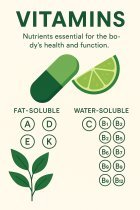
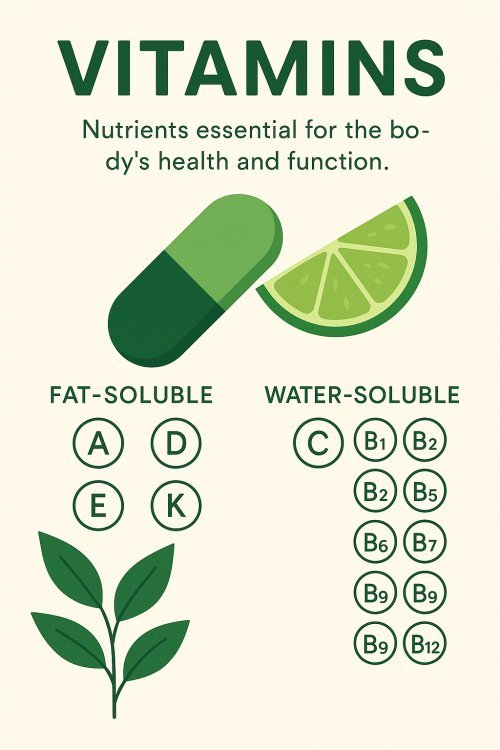
Vitamin A is an essential fat-soluble nutrient that plays a key role in maintaining healthy vision, supporting the immune system, promoting reproductive health, and ensuring the proper function of the heart, lungs, kidneys, and other organs.

About Vitamin A
Vital for Vision, Skin, and Immunity
Vitamin A is an essential fat-soluble nutrient that plays a key role in maintaining healthy vision, supporting the immune system, promoting reproductive health, and ensuring the proper function of the heart, lungs, kidneys, and other organs.
Understanding Vitamin A and its role in your body can help you make informed, health-conscious choices.
🧠 What Does Vitamin A Do?
-
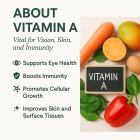
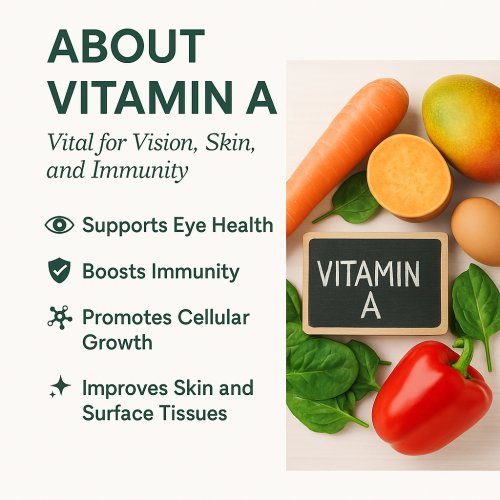
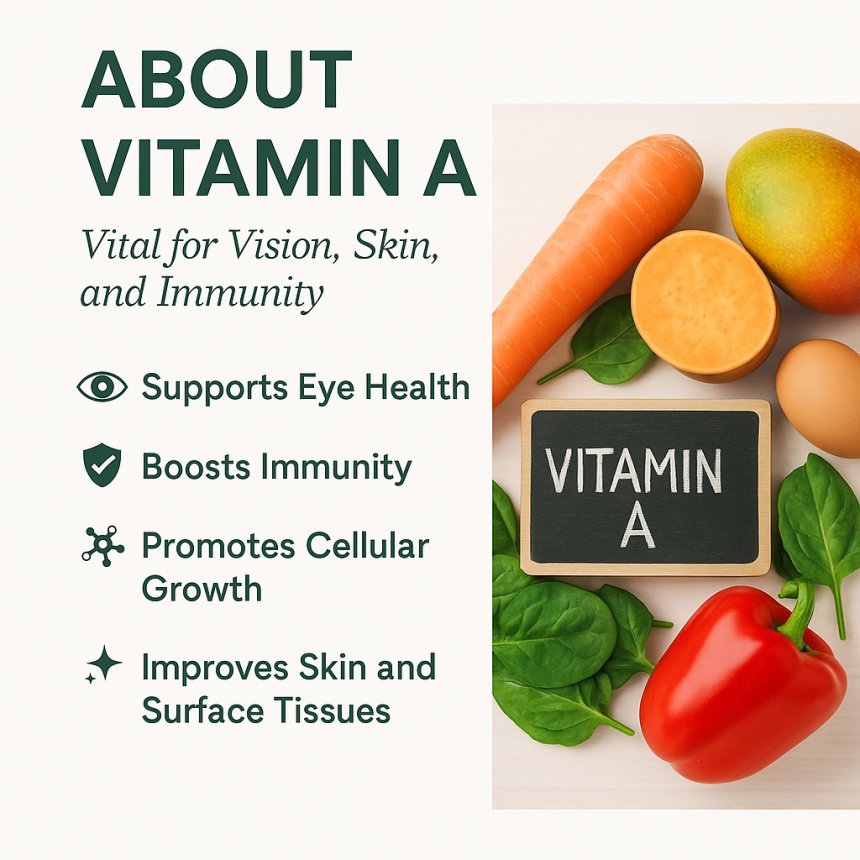
👁️ Supports Eye Health:
Vitamin A is critical for good vision—especially night vision. It helps produce rhodopsin, a pigment in the retina that allows the eye to see in low light. -
🛡️ Boosts Immunity:
It strengthens the immune system by supporting the health of skin and mucous membranes, which serve as the body’s first line of defense. -
🧬 Promotes Cellular Growth:
Vitamin A is involved in cell division and reproduction, which helps the body grow and heal. -
✨ Improves Skin and Surface Tissues:
It contributes to smooth, healthy skin and supports the lining of the lungs, intestines, and urinary tract.
🥕 Types of Vitamin A
-
Preformed Vitamin A (Retinol)
Found in animal products such as liver, eggs, butter, and fortified dairy. -
Provitamin A (Beta-Carotene)
Found in plant-based foods like carrots, sweet potatoes, spinach, kale, and mangoes. Your body converts beta-carotene into active vitamin A.
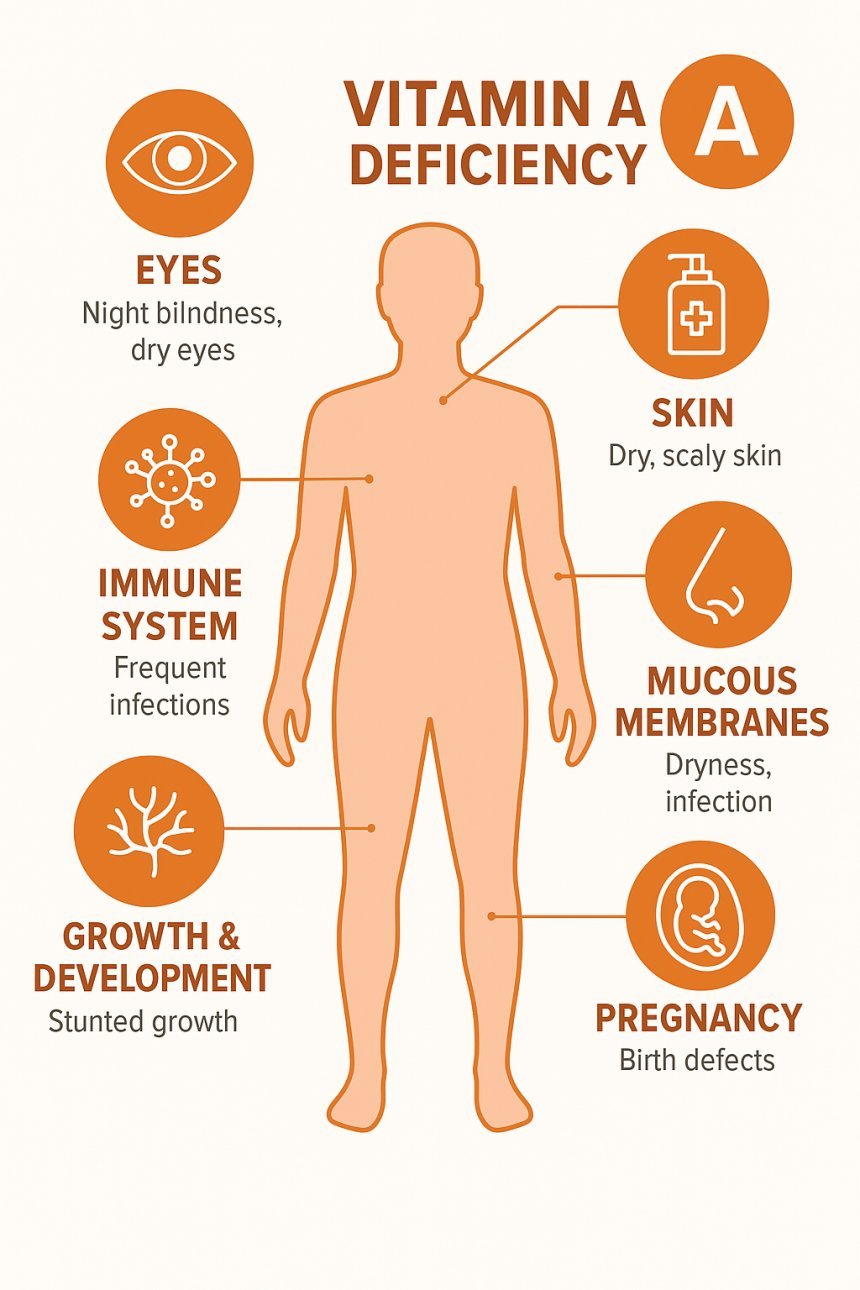
⚠️ Signs of Vitamin A Deficiency
-
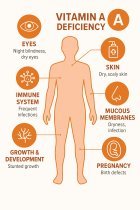
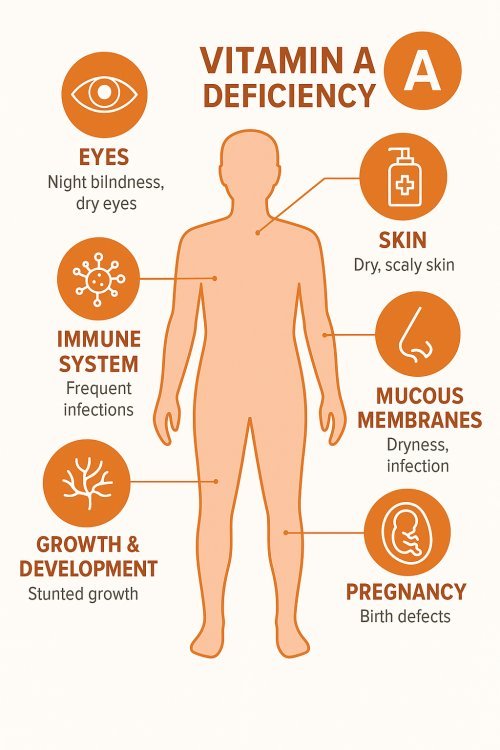
Dry eyes or night blindness
-
Dry, flaky skin
-
Frequent infections
-
Delayed growth in children
-
Poor wound healing
Severe deficiency can lead to vision loss and increased susceptibility to infections.
✅ Top Food Sources of Vitamin A
-
Carrots 🥕
-
Sweet potatoes
-
Spinach and kale 🥬
-
Red bell peppers
-
Eggs 🥚
-
Liver (beef or chicken)
-
Fortified dairy products (milk, cheese)
Tip: Eating Vitamin A–rich foods with a healthy fat (like olive oil or nuts) helps your body absorb it better.
🧘♀️ How Much Vitamin A Do You Need?
-
Adults (19+ years):
-
Men: 900 mcg RAE/day
-
Women: 700 mcg RAE/day
-
-
Pregnant or breastfeeding women may need more—consult your healthcare provider.
RAE = Retinol Activity Equivalents, which includes all forms of vitamin A from food and supplements.
🛑 Too Much of a Good Thing?
Yes. Excess vitamin A (especially from supplements) can be toxic and cause headaches, dizziness, liver damage, or birth defects. Stick to recommended daily values unless directed by a healthcare provider.
Focus on a colorful, balanced diet rich in fruits and vegetables to naturally support your vitamin A levels. When in doubt, nature knows best.
Share
What's Your Reaction?
 Like
0
Like
0
 Dislike
0
Dislike
0
 Love
0
Love
0
 Funny
0
Funny
0
 Angry
0
Angry
0
 Sad
0
Sad
0
 Wow
0
Wow
0